Fed Sentiment Index
FXStreet Fed Sentiment Index: Tracking Fedspeak changes to find a trading edge
Deciphering Fedspeak: Why it is crucial to understand monetary policy shifts
In the recently updated FAQ section of its official website, the Fed explains:
“Forward guidance is a tool that central banks use to tell the public about the likely future course of monetary policy. When central banks provide forward guidance, individuals and businesses can use this information in making decisions about spending and investments. Thus, forward guidance about future policy can influence financial and economic conditions today.”
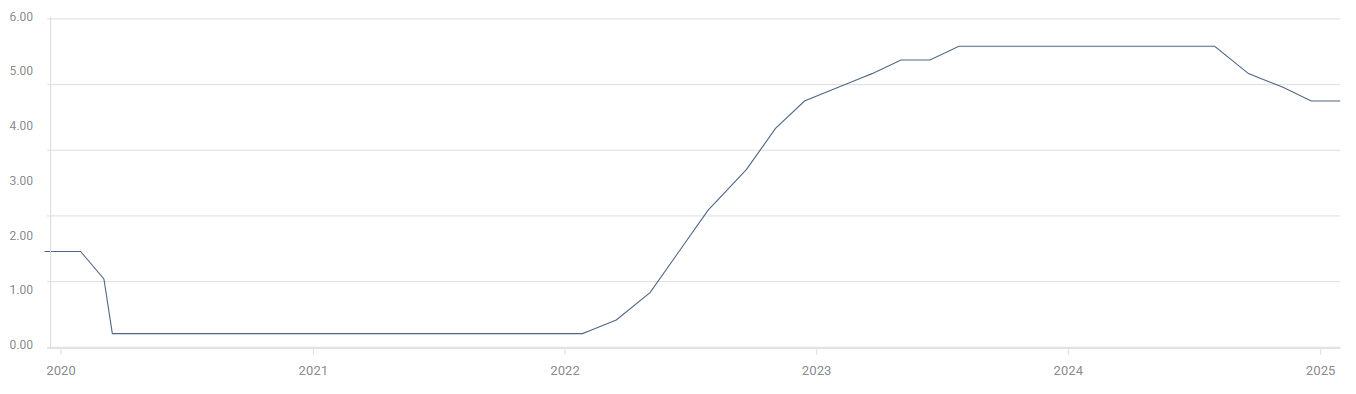
The Fed has two mandates: Achieving maximum employment and promoting stable prices. The Fed doesn’t take asset prices into consideration when setting its monetary policy. That, however, doesn’t change the fact that monetary policy decisions and comments on the outlook have a significant impact on financial markets.
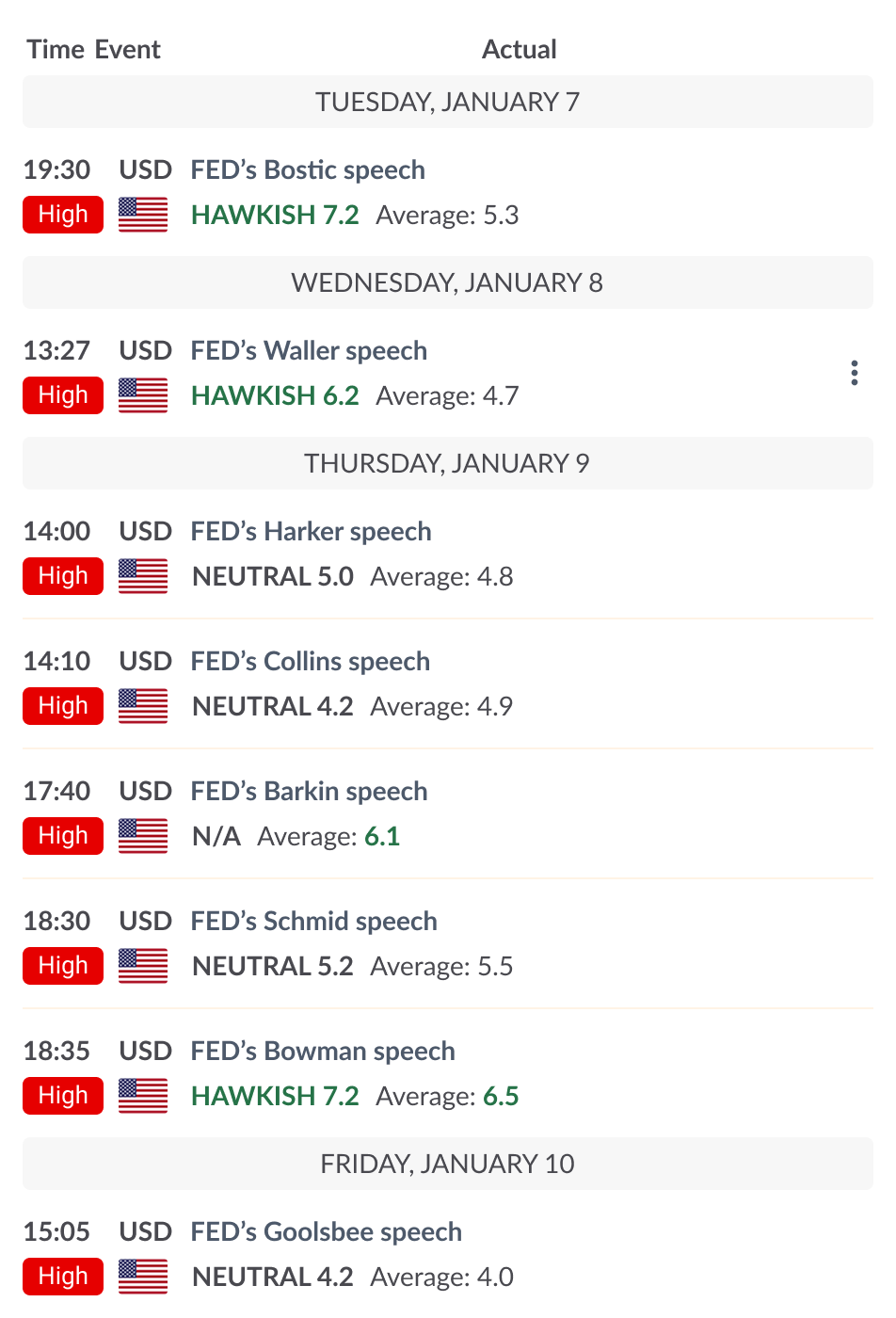
Interpreting comments from Fed policymakers and reading between the lines in official communications is not an easy task, especially for beginner traders. At FXStreet, we have developed a custom AI model – the Speech Tracker, which analyzes all the relevant speeches by the FOMC members and rates them on a dove-hawk scale. This allows us to provide traders with real-time notifications on our Economic Calendar on how each Fedspeak could influence the USD’s valuation.
Introducing FXStreet Fed Sentiment Index
FXStreet Fed Sentiment Index presents the Fed’s tone as a single value, taking into consideration comments from all voting and non-voting members of the FOMC in TV appearances, conferences, interviews, as well as the Fed’s official written communications and more.
A value of 100 represents a neutral tone. An increasing value above 100 points to a hawkish tilt in the Fed’s language, while a decreasing value below 100 suggests a dovish change in sentiment. The highest the index is, the most hawkish FOMC speakers are sounding ahead of the next monetary policy meeting and vice versa, lower levels suggest dovish shifts in the future Fed policy stance.
FXStreet Fed Sentiment Index is adjusted every time a Fed policymaker delivers comments on the policy outlook. While our Speech Tracker provides valuable insights into possible short-term reactions to individual FOMC speeches, our Fed Sentiment Index aims to explain how markets perceive the Fed language in its totality, over a longer period of time. Hence, its value cannot be understated with regard to spotting changes in USD-related asset price patterns, assessing inter-market correlations, and identifying divergences between near-term market reactions and long-term trends.
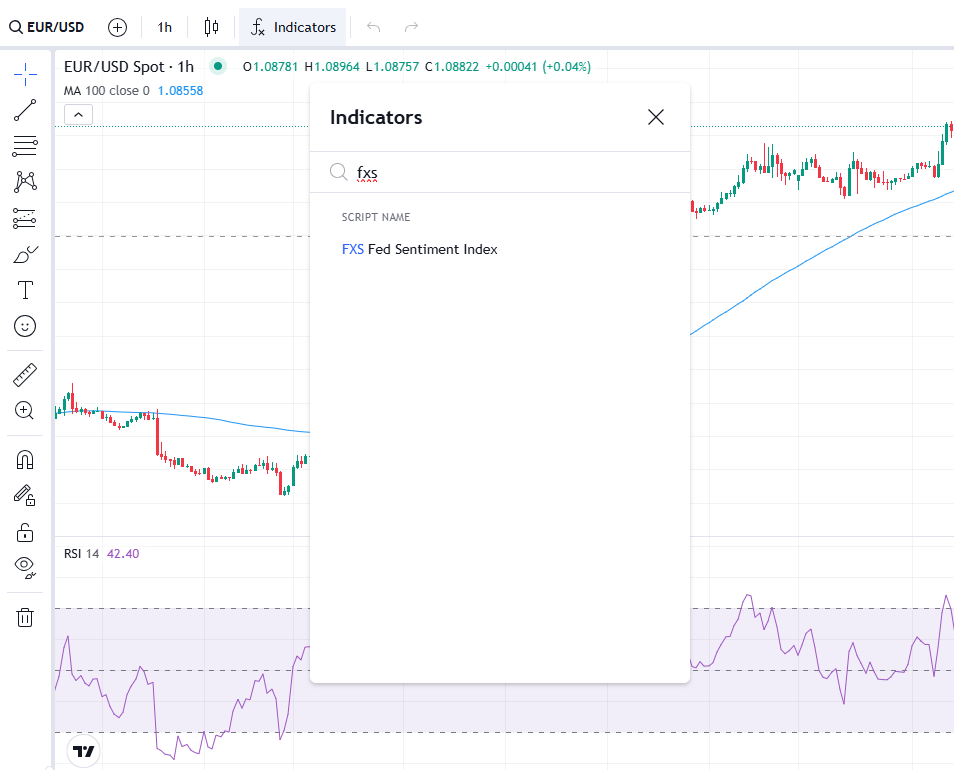
HOW TO USE FXSTREET FED SENTIMENT INDEX
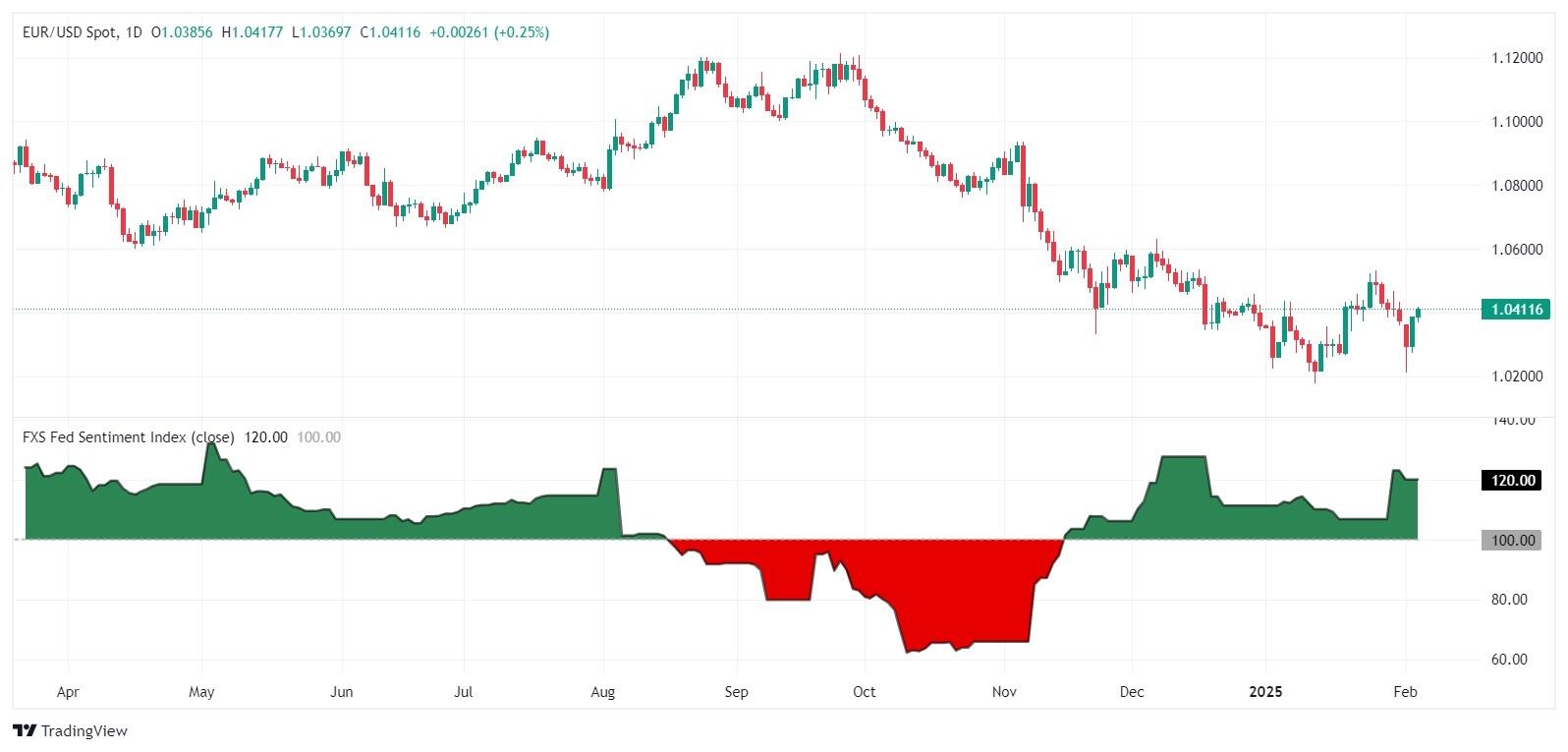
FXStreet Fed Sentiment Index performance in 2024: Fed’s dovish quest halted by Trump’s triumph
The downtrend continued for one more month, while the Fed materialized a second rate cut at its early November meeting, but it has completely turned around since the US election.
Donald Trump’s clear victory, and his well-known intentions to use tariffs and tax cuts, which could trigger new legs of inflation, have seemingly affected how FOMC members perceive future monetary policy. As a result, the index turned hawkish to begin the new year.
Educational Reports
Editors' picks

EUR/USD holds firm above 1.1750 as risk flows dominate
EUR/USD stays firm above 1.1760 in European trading hours on Wednesday, bolstered by improved risk sentiment, which dents the US Dollar's safe-haven appeal. Confidence returned on headlines indicating the United States and Iran are moving towards a deal to end the conflict. The deal would involve both sides lifting restrictions on transit through the Strait of Hormuz.

USD/JPY off lows, still down 1% on likely 'Yentervention'
USD/JPY is off ten-week lows but remains heavy near 156.00 in early Europe on Wednesday. Markets speculate another round of FX intervention by Japan's authorities behind the latest leg up in the Japanese Yen, keeping the bearish pressure intact on the currency pair.

Gold continues scaling higher; retakes $4,700 amid peace deal hopes
Gold extends its intraday ascent and climbs to an over one-week high, re-attempting $4,700 in Wednesday's European session. The US Dollar weakens across the board amid optimism over a potential US-Iran peace deal, helping the commodity to build on its recovery from a more than one-month trough, around the $4,500 mark set on Monday.

ADP Employment Report set to show US job market gained momentum in April
Developments in the Middle East conflict are likely to remain at the forefront this week, but investors will also keep an eye on a string of US labour market figures.

UK 30-year gilts hit 5.78%, the highest since 1998: what is being priced in? Premium
UK 30-year gilts traded as high as 5.78% on Tuesday, the highest level since 1998, while 10-year yields topped 5.10% with markets pricing in nearly three-quarter-point Bank of England (BoE) rate hikes this year.