Bank of Japan (BoJ)
Bank of Japan raises interest rate by 25 bps to 1.25%, as expected

The Bank of Japan (BoJ) board members decided to raise the short-term interest rate by 25 basis points (bps) to 1.25% from 1.00%, following the conclusion of its two-day monetary policy review meeting on Friday.
Ueda Speech: BoJ Governor sheds light policy outlook after the expected interest rate hike
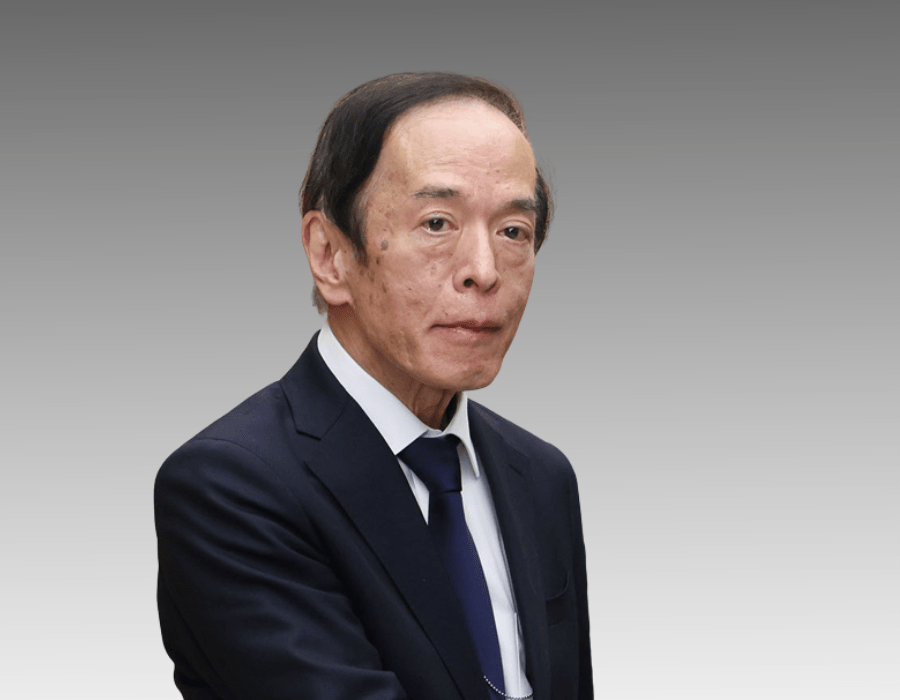
Bank of Japan (BoJ) Governor Kazuo Ueda is addressing the press conference, explaining the reason behind raising the key interest rate by 25 basis points (bps) to 1.25% from 1.00% at the September meeting.
BoJ Recap: Not as hawkish as expected
The Bank of Japan (BoJ) raised its short-term interest-rate target to 1.25% from 1.00% in a 7-2 vote, marking another step in the normalisation of monetary policy and widely matching what everyone has been expecting for weeks.
BOJ Latest News
BOJ Latest Analysis
Related content
Big Picture
What is the BOJ?
The Bank of Japan (BoJ) is the central bank of Japan. Established under the Bank of Japan
Act in 1882, it is a juridical entity and neither a government agency nor a private corporation. The BoJ sets
monetary policy in the country. Its mandate is to issue banknotes and carry out currency and monetary control to
ensure price stability, which means an inflation target of around 2%.
Policy Board: The Policy Board is the bank's highest decision-making body. It
determines the guidelines for currency and monetary control, sets the basic principles for carrying out the bank's
operations and oversees the performance of the bank's officers, excluding auditors and counselors.
History: The Bank of Japan was established under the Bank of Japan Act, promulgated in
June 1882, and began operating as the nation's central bank on October 10, 1882. It was reorganized in 1942 under
the Bank of Japan Act of 1942, which reflected the wartime context. The Act of 1942 was amended several times after World War
II, and the establishment of the Policy Board as the bank's highest decision-making body occurred in June 1949. In
June 1997, the Act of 1942 was revised completely under the principles of independence and transparency. The revised Act came into
effect on April 1, 1998.
Who is BOJ's Governor?
Kazuo Ueda was born in Makinohara, Japan, on September 20, 1951. He is the 32nd and current Governor of the BoJ. He graduated from the University of Tokyo with a Bachelor of Science and Mathematics and received a PhD in economics from the Massachusetts Institute of Technology (MIT).
He is a professor emeritus at the University of Tokyo and also worked as a professor at Kyoritsu Women's University. In February 2023, former Prime Minister Fumio Kishida nominated Ueda as the governor of the BoJ. He is widely regarded as an expert on monetary policy but was considered a surprise appointment by analysts. He wasn’t even considered a dark-horse candidate, as the BoJ governor role has traditionally gone to long-serving Finance Ministry bureaucrats or central bank officials. Ueda is the first academic economist to lead the BoJ in the post-World War II era.
Interest rates latest news
The world interest rates table
The World Interest Rates Table reflects the current interest rates of the main countries around the world, set by their respective Central Banks. Rates typically reflect the health of individual economies, as in a perfect scenario, Central Banks tend to rise rates when the economy is growing and therefore instigate inflation.